
Buying Land in Mauritius: The Complete 2026 Buyer's Guide
15 July 2026 Olaya Properties4 min read
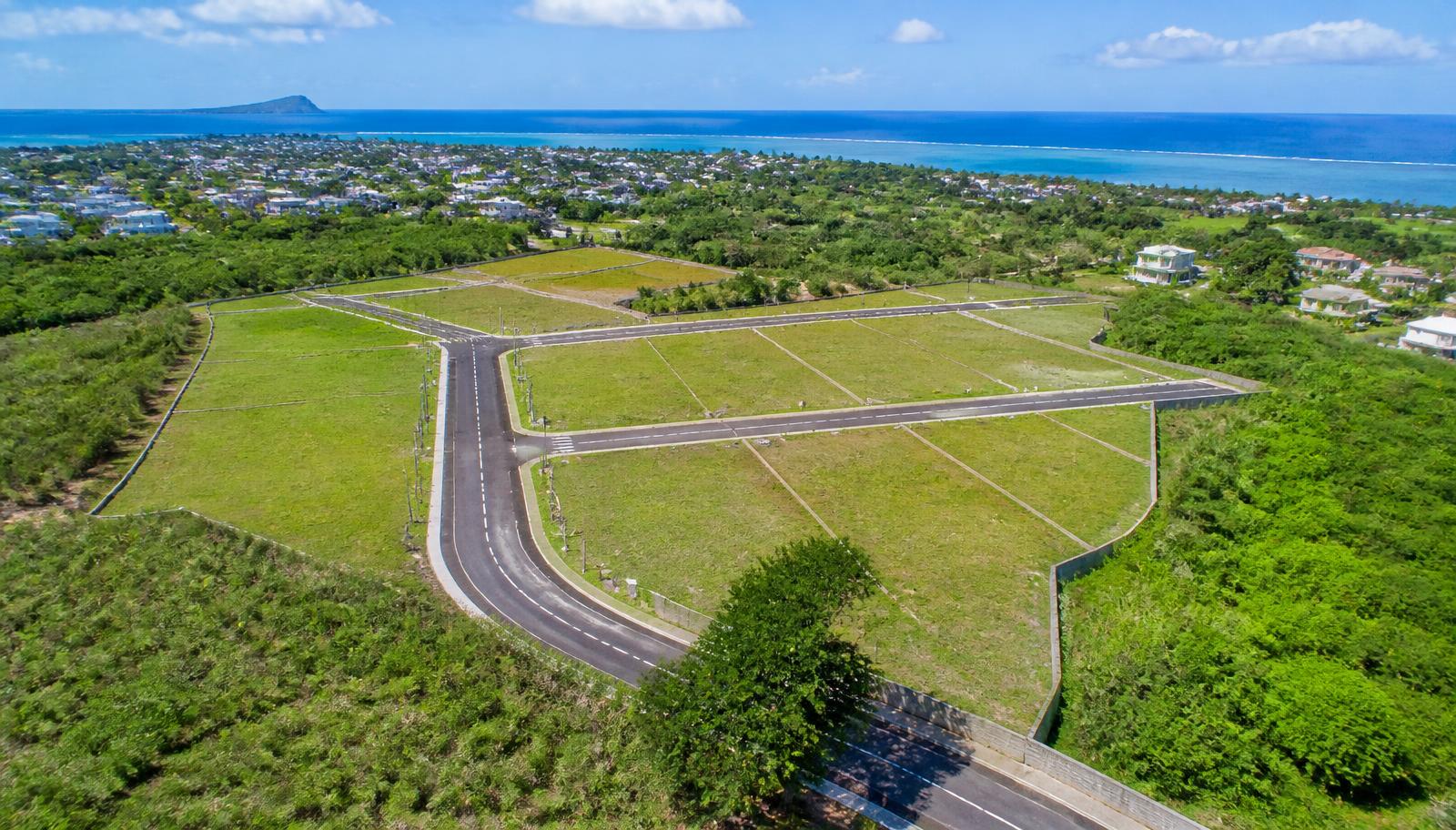
Buying land is still the most flexible way to enter the Mauritian property market: you control the design, the build cost and the timeline. It is also the transaction where the most goes wrong, because a plot that looks identical to its neighbour can carry very different rights and costs.
This guide walks through how land is measured and priced in Mauritius, the checks that protect you, and the realistic budget beyond the asking price.
How land is measured and priced in Mauritius
Land here is almost never quoted in square metres.
- 1 perche = 42.21 m2. Residential plots are usually advertised in perches, and prices are compared per perche.
- 1 toise = 3.8 m2. Older title deeds, especially in villages and family subdivisions, still use toises.
- A common serviced residential plot is between 7 and 20 perches (roughly 300 to 850 m2).
When you compare two plots, always convert to a price per perche. A larger plot at a lower headline price can still be the more expensive land once you divide it out, and a smaller serviced plot in a morcellement is often better value than raw agricultural land that needs infrastructure.
The seven checks before you sign anything
- Title deed and chain of ownership. Your notary traces the deed back through previous owners to confirm the seller can legally sell and that no undeclared heirs have a claim.
- Morcellement permit. Any legal subdivision of land needs a morcellement permit from the Morcellement Board. If the plot comes from a subdivision without one, you may not be able to register the sale or obtain a building permit.
- Site plan and boundaries. A licensed land surveyor should peg the boundaries on site and produce an up-to-date plan. Fences and hedges frequently sit outside the legal boundary.
- Servicing. Confirm in writing which of these are already at the plot: water connection, electricity (CEB), tarred road access, and drainage. Bringing services to an unserviced plot can add a substantial cost and months of delay.
- Land classification and building rights. Agricultural land cannot simply be built on; conversion requires authorisation. For residential land, check the building height, setbacks and coverage allowed under the local authority outline scheme.
- Encumbrances. Ask the notary to confirm there is no mortgage, inscription, right of way or servitude registered against the plot.
- Flood and terrain risk. Look at the plot after heavy rain if you can, check the natural water flow, and factor in the cost of retaining walls on a sloped site.
What it really costs
Beyond the purchase price, plan for:
- Registration duty, generally 5% of the purchase price, paid by the buyer.
- Notary fees, typically 1% to 2% plus disbursements and VAT.
- Land survey and site plan fees.
- Connection fees for water and electricity if the plot is not fully serviced.
- Boundary walls, access and levelling, which are easy to underestimate on a sloped or irregular plot.
Land transfer tax is normally the seller''s liability, but who pays what should always be stated in the deed. Rates and thresholds change with each national budget, so ask your notary to confirm the figures that apply on your signing date.
The buying process, step by step
- Shortlist plots and compare price per perche within the same region.
- Visit the site with the agent, walk the boundaries and note the neighbours.
- Make an offer and agree the conditions precedent in writing.
- Sign a preliminary agreement, usually with a deposit held by the notary.
- The notary runs the legal searches while you confirm servicing and building rights.
- Sign the final deed before the notary, pay the balance and the duties.
- Registration and transcription at the Registrar General complete the transfer.
Allow roughly four to twelve weeks between the preliminary agreement and the final deed for a clean local transaction; longer where an inheritance, a bank loan or a foreign buyer is involved.
Where the demand is
Serviced plots in Albion, Flic-en-Flac, Tamarin and the west attract lifestyle buyers and rental investors. Rose-Belle, Quatre-Bornes, Curepipe and Palma attract families building a main home closer to schools and work. In the north, Grand Baie and Pereybere carry a premium driven by tourism and expatriate demand.
Frequently asked questions
How many square metres is one perche in Mauritius?
One perche equals 42.21 square metres. Twenty perches is therefore approximately 844 square metres.
Can a foreigner buy land in Mauritius?
Non-citizens cannot freely buy ordinary residential land. Purchases are made through approved schemes such as PDS, IRS, RES or Smart City projects, subject to Economic Development Board authorisation. See our guide for foreign buyers.
What is a morcellement permit and why does it matter?
It is the official authorisation to subdivide a parcel of land into separate plots. Without it, a plot may not be legally transferable and a building permit may be refused.
Is a serviced plot worth the premium?
Usually yes. The premium often costs less than installing water, electricity, drainage and road access yourself, and a serviced plot can be built on far sooner.
How long does a land purchase take?
Around four to twelve weeks for a straightforward local sale, from preliminary agreement to signature of the final deed before the notary.
Thinking about a specific plot? Send us the location and size and we will tell you what to verify before you commit.