
Buying Off-Plan in Mauritius (VEFA): How It Works and What to Check
14 August 2026 Olaya Properties5 min read
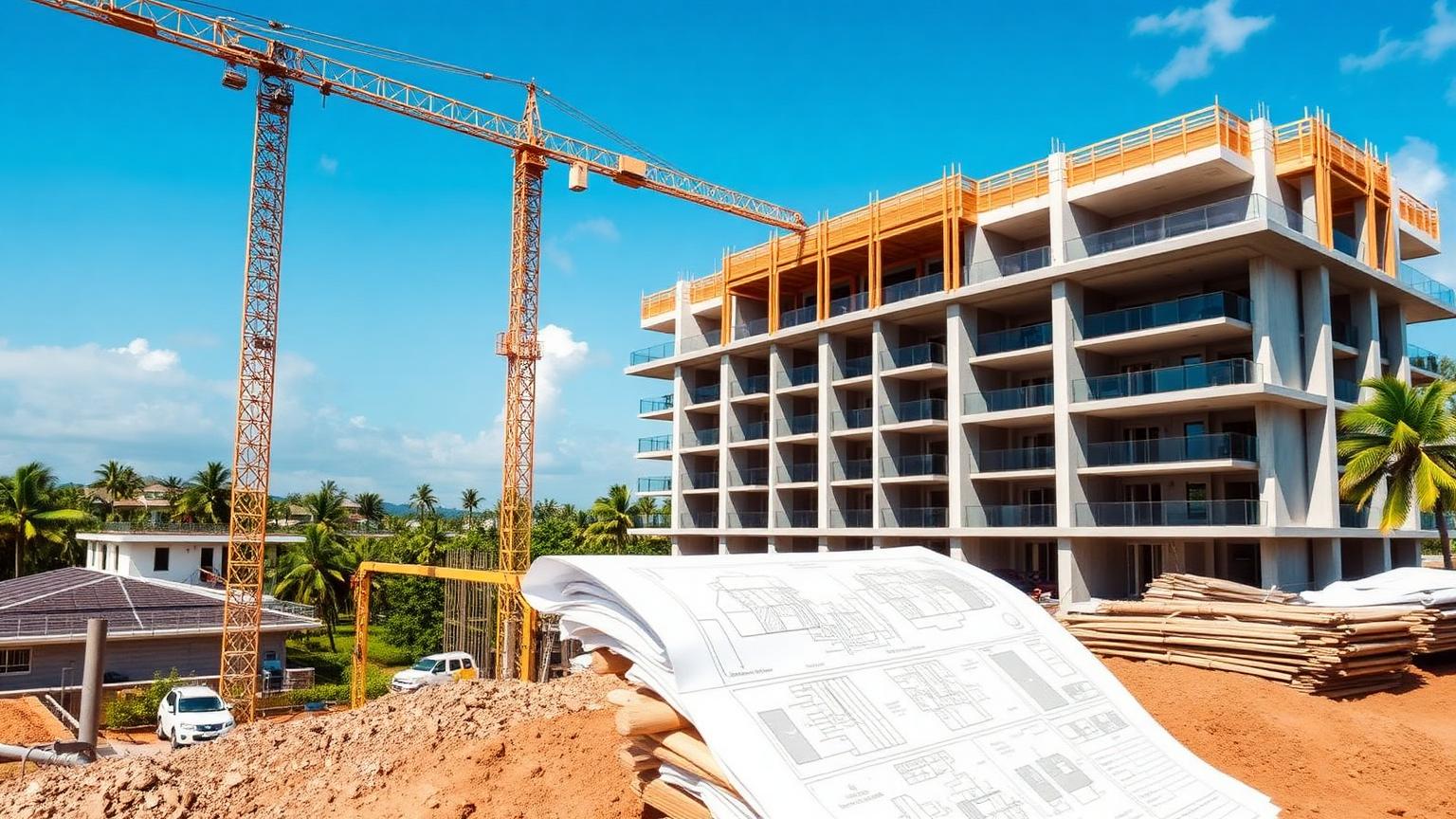
Buying off-plan in Mauritius, known legally as Vente en l'État Futur d'Achèvement (VEFA), means you sign a notarial deed and pay for a property in stages as it is built, rather than paying the full price for a finished unit. It is the standard structure used across most new developments in Mauritius, including PDS and apartment schemes open to foreign buyers, and it is backed by a compulsory bank guarantee (garantie financière d'achèvement, or GFA) that protects your instalments if the developer fails to complete the project.
What VEFA Actually Means
VEFA is a French-derived legal framework, adopted into Mauritian property law, under which ownership transfers progressively as construction advances. You are not buying a finished asset outright; you are buying rights to a property that is completed in phases, with the notarial deed of sale (contrat de VEFA) signed at the outset before major works are finished.
This differs from a standard resale purchase, where the deed of sale is signed once and the full price is paid at signature (or shortly after, subject to financing). With VEFA:
- The deed of sale is signed early, often at foundation or early structural stage.
- Payments are staggered according to a schedule tied to construction milestones.
- The developer must provide a bank guarantee covering the amounts you have paid, so if the project stalls, a bank or insurer is obligated to either complete the works or refund you.
Why Mauritius Uses This Model
VEFA is the mechanism that allows foreign nationals to buy under most PDS (Property Development Scheme) projects, since these are typically sold before or during construction. It gives developers phased cash flow to fund building costs, while giving buyers legal title and a completion guarantee rather than relying purely on trust in the developer's reputation.
The Payment Schedule
Payment calls under VEFA in Mauritius are broadly aligned with a standard schedule, though exact percentages vary slightly by developer and project:
- A reservation deposit (often around 5-10%) paid on signing a reservation agreement, before the notarial deed.
- A further tranche on signature of the deed of sale, once land and preliminary approvals are in place.
- Progressive calls as construction reaches defined stages: completion of foundations, structural works (gros œuvre), roofing, and finishing works.
- A final balance on delivery (livraison), once the property is habitable and connected to utilities.
These figures should always be treated as indicative and confirmed against the specific contract, since the number and size of tranches differ between projects. Each call for funds should be accompanied by an architect's or project manager's certificate confirming the stage has genuinely been reached — this is a document worth asking to see before you pay.
Typical Milestones to Track
- Notarial deed signature and registration
- Completion of foundations and basement (if any)
- Completion of the structural frame
- Roof and external envelope closed
- Interior finishes, fittings and landscaping
- Final handover with completion certificate (quitus) and keys
Due Diligence Before You Sign
Buying off-plan means you are trusting drawings, specifications and a developer's track record rather than inspecting a finished unit, so due diligence matters more, not less.
- Check the developer's history. Ask about previously completed projects, whether they were delivered on time and to the promised specification, and whether you can visit a finished development by the same team.
- Confirm the bank guarantee is in place. The GFA should be issued by a recognised Mauritian bank or insurer and referenced in your contract; ask your notary to confirm its validity before signing.
- Read the specifications document (descriptif) closely. This lists materials, brands, finishes and included fittings — verbal promises about "high-end finishes" mean little without a written specification.
- Understand the penalty clauses for delay. A reasonable VEFA contract includes compensation if delivery is delayed beyond a grace period.
- Clarify service charges and the management structure. For apartments and villas within a managed estate, ask what is included and get an estimate of monthly fees before committing.
- Use an independent notary or at least an independent legal review, even though the developer's notary handles the deed, to make sure the schedule and clauses are standard and balanced.
Site Visits During Construction
Even without a finished unit to inspect, visiting the site periodically is worthwhile. It lets you see actual progress against payment calls, check the quality of works in progress, and get a feel for the surrounding infrastructure — road access, drainage, neighbouring plots — that photos and brochures do not always convey.
Currency, Repatriation and Financing
Foreign buyers under PDS and similar schemes can generally finance purchases through a mix of overseas funds and local bank loans; see our separate guide on home loan financing in Mauritius for how staged VEFA payments interact with mortgage drawdowns. Funds transferred into Mauritius for the purchase, and rental income or resale proceeds later on, are generally repatriable, but you should confirm the current rules with your bank and notary at the time of transaction, since regulatory detail can be adjusted.
Risks Specific to Buying Off-Plan
- Construction delays. Even well-run projects can be affected by weather, supply chains or permitting. Ask what buffer is built into the delivery date quoted to you.
- Specification changes. Occasionally, finishes or layouts are adjusted during construction; your contract should specify how you are notified and whether you can object to material changes.
- Market movement. Prices and demand can shift between reservation and completion, which is a normal feature of off-plan investment in any market and should be weighed against the benefit of buying at today's price.
- Currency exposure. If your funds are held in a currency other than MUR, exchange rate movements over the build period can affect your effective cost.
Advantages of Buying Off-Plan
- Access to the newest stock across developments, often with better layouts and modern specifications than older resale stock on the buy listings.
- Staged payments can ease cash flow versus paying the full price for a completed unit.
- Potential for capital appreciation between reservation and delivery in a rising market, though this is never guaranteed.
- Ability to select unit position, floor and sometimes finishes early in the sales process, before the best units are taken.
Talk to Olaya Properties
If you are considering an off-plan purchase in Mauritius, Olaya Properties can talk you through current new developments, the payment schedules attached to each, and how they compare with resale options on our buy listings. We can also help arrange viewings, put you in touch with local notaries, and support you through to completion.
Get in touch via our contact page, call +230 5511 1510, or email sales@olaya.mu to discuss your project.